Common Kitchen Plumbing Problems — and How to Stop Them Getting Worse
The kitchen sink, disposal and dishwasher work harder than any other plumbing in the house. Here are the problems they develop most often, what is safe to try yourself, and the signs to call before a drip becomes a cabinet, floor or ceiling repair.
The fast answer: is it one appliance, or water on the move?
Sort a kitchen problem the same way a plumber does. If one thing misbehaves — the disposal hums, the dishwasher leaves water standing, one faucet drips — the fault usually lives in that fixture or the short run of pipe serving it, and many of those are manageable. If water is appearing under the sink, inside the cabinet, on the floor or on the ceiling below, that is a different category. Water on the move always outranks a noisy appliance — find it first, and let professional kitchen and bathroom plumbing help handle anything you cannot see the whole of.
The slow kitchen sink: grease builds where you cannot see it
A kitchen sink rarely clogs all at once. It slows over months as cooking grease, poured away warm and liquid, cools on the pipe wall and catches food particles, coffee grounds and soap until the passage narrows. Clear what you can reach at the strainer, run hot water, and try a cup plunger with the overflow and the second bowl sealed if you have a double sink. If it clears and slows again within weeks, the narrowing sits deeper, in the branch line, and repeated plunging is only moving the symptom around. That pattern is exactly what clogged drain cleaning is for: clear the line at its full width once, instead of meeting the same blockage again at the worst possible moment.
The garbage disposal: humming, jammed, leaking or dead
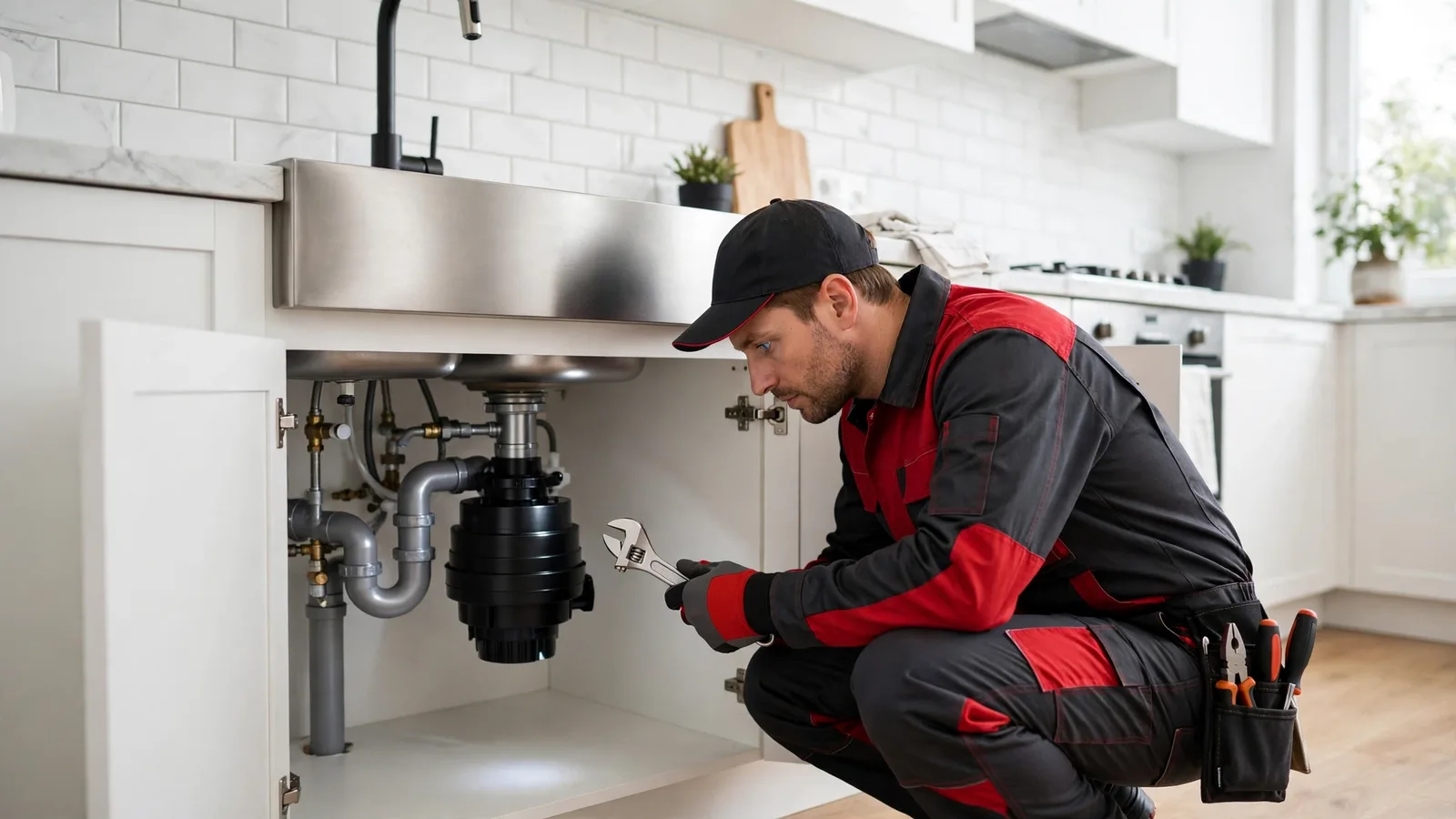
Each disposal symptom points somewhere different. A hum with no grinding usually means something is jammed against the flywheel — switch it off, never reach inside, and check with a torch for a bottle cap, bone or piece of cutlery, removing anything you find with tongs. Many units have a reset button underneath that frees a jam with the power off. A unit that does nothing at all may simply have tripped, or lost power at the outlet. Leaking is the symptom to respect: water from the top flange is a sink-seal problem, water from the side is a dishwasher connection, and water dripping from the bottom of the unit itself usually means the internal seals have failed and replacement, not repair, is the honest answer. Our garbage disposal services team can tell you on inspection which side of that line your unit sits.
The dishwasher: standing water, poor cleaning and leaks at the door
An inch of clean water in the bottom of a dishwasher after a cycle is normal — it keeps the seals moist. Dirty water standing higher, water that smells, or dishes coming out gritty point to a partly blocked filter, a kinked or clogged drain hose, or a drain loop that has fallen flat and is letting sink water flow back in. Clean the filter at the base first — it is the single most common cause. Leaking at the front is usually a door seal or a unit no longer level. Leaking underneath is supply-side work: it does not stop when the cycle ends. And if the dishwasher and the sink back up into each other, the problem is shared drainage, not either appliance.
Drips under the sink and the faucet that never quite stops
Open the kitchen cabinet and actually look, ideally while someone runs the tap and then the dishwasher. Kitchen leaks hide in the same few places: the trap joints under the basin, the supply valves and flexible lines, the base of the faucet, and the connections to the disposal and dishwasher. A drip that appears only when water drains is a trap or drain-side leak. A fitting that is damp all the time, or a valve with green or white crust building on it, is on the pressurised side — it is leaking around the clock, including overnight. A faucet that drips after it is fully off is usually a worn cartridge, and it will only get faster. A slow pressurised leak is the classic hidden-damage story: the cabinet floor hides it until the board softens or the ceiling below stains, by which point it has become leak detection and repair work too.
What not to do in a kitchen
Do not pour grease down the sink followed by hot water — it simply moves the grease further down the line, where it cools and sets somewhere harder to reach. Wipe pans into the trash instead. Do not use chemical drain cleaners in a sink with a disposal or a standing blockage: they rarely clear a grease clog fully, they can damage disposal seals, and the caustic liquid sitting in the trap is a hazard for whoever opens it next. Do not keep resetting a disposal that trips again and again — repetition means a jam, a failing motor or an electrical fault, not bad luck. And never run the dishwasher or disposal when you know something underneath is leaking, to see if it gets worse. It will.
When to call us
Homes in Laurel and Bowie bring us the same kitchen list every month: the sink that slowed a little more each season, the disposal that started humming at the worst moment, the cabinet nobody opened until the floor below it showed a stain. Clear the strainer, clean the dishwasher filter, check the disposal reset — those are yours, and they settle a good share of kitchen problems. But call Eagle Plumbing at (240) 266-8317 or send the lead form on this site when water is appearing under the sink or on a ceiling below, when a drain slows again weeks after you cleared it, when a disposal leaks from its base or will not stay reset, or when the sink and dishwasher start backing up into each other. We will find the actual cause, show you what we found, and price the repair before any work begins.
Need Help With This?
Our related service: Kitchen & Bathroom Plumbing Remodel — Plumbing rough-in and fixture installation for kitchen and bathroom remodels — drains, supply lines and fixtures done to code.